Tag Archives: lettering

Just Lucky, I Guess

When I was in middle school, I basically came home every day and wrote for about 2 hours. In grad school, I used to write every night between 10 pm and 2 am. I didn’t really think about it; during the times in my life when I was into my work, I was into my work. When I do NaNoWriMo or go on a writing retreat, I write at least 2000 words a day, and often, many, many more. Some of us are lucky in that we don’t have to discipline ourselves too much: the thing we want most is the thing we want now.
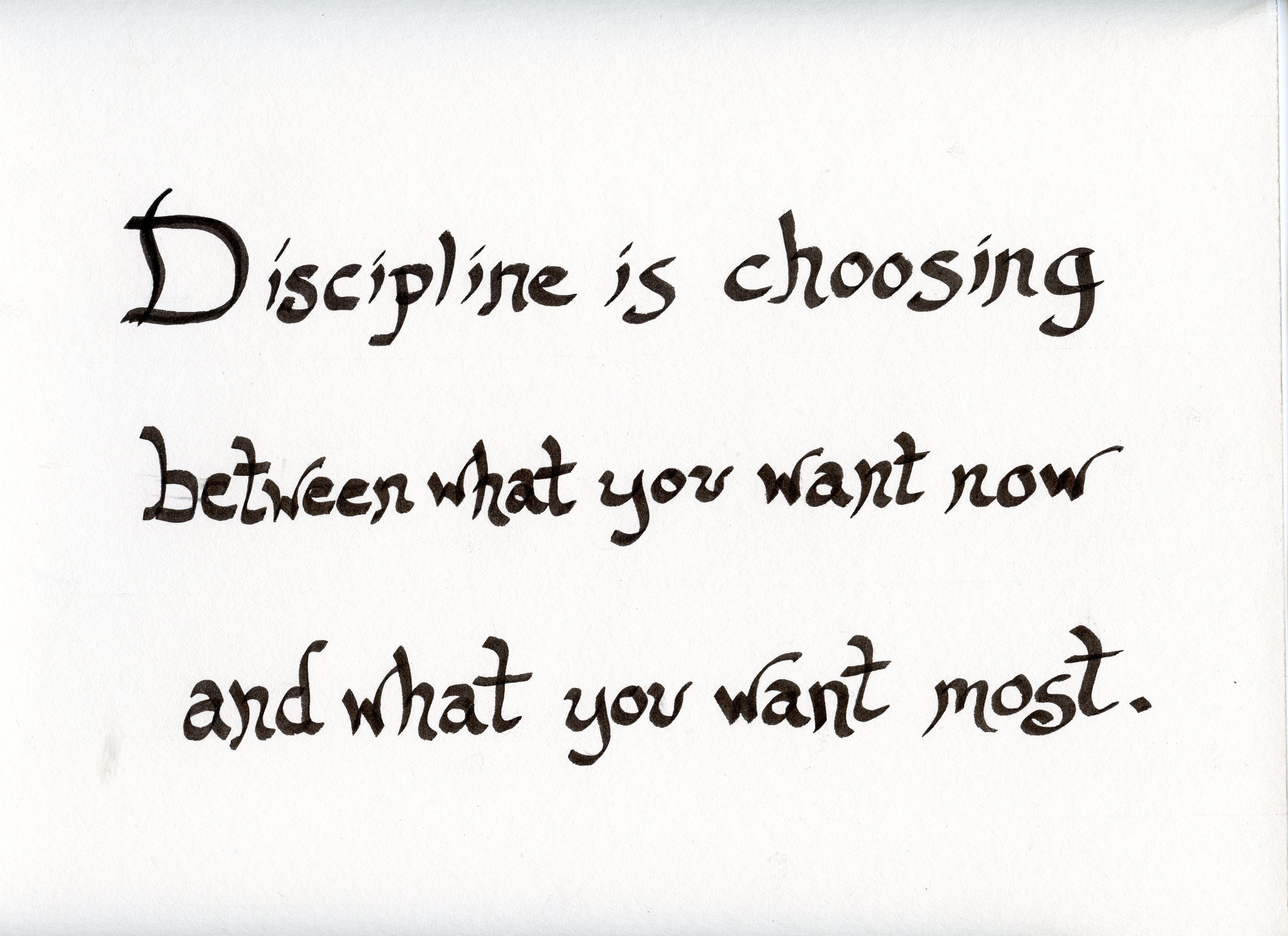
It's a sign. It pretty much speaks for itself.

It’s a sign. It pretty much speaks for itself.

I just lettered this sign for my darling husband, at his request. Usually, something like this would take me a couple days, and each letter would be perfectly spaced and formed, sketched first in pencil and then inked with a fine-tipped pen (but I would still manage to smear the ink while erasing the guidelines, and also get some on my hand and smudge it in the gutter). When I lettered the Robert Graves poem, it took me about a week, and I’m pretty pleased with it, but it still isn’t perfect to my eye. Anyway, he said he didn’t care if it was perfect, he just wanted it done. So I just quickly blocked out approximately where the letters should go.

It’s an interesting sentiment, anyway. There are times when I don’t want to draw or write, and I have to force it. There are even times when I don’t force it and just watch Netflix and maybe cry about my failure as an artist. Usually, though, I’m fairly focused on my goals. When I decide to write 50,000 words in a month, or cut out carbs, or clean my office, usually I can just do it.

A quick Google search attributes this quote to a psychologist named Augusta F. Kantra.

The Trickster’s Hat Part 9

How and Why by Robert Graves

How and Why by Robert Graves

Exercise 29: illustrate a quote. But not just any quote. It was supposed to be something with a bit of humor to it as well as depth. I struggled with this assignment for days, perusing Bartlett’s, surfing web pages full of inspirational quotes. I didn’t want to put any effort into illustrating a quote that wouldn’t be deeply meaningful to me, and most of my favorite quotes are fairly serious, primarily about writing and creativity.

Just as I was about to lose hope, I noticed a little scrap of paper tacked to the wall behind me, where I had written out this Robert Graves poem, “How and Why” from (I think) the book Ann at HIghwood Hall: Poems for Children, published in 1964. (It’s entirely possible it’s from a different book of poetry for children by the same author, but I think this is the one). I had long been fascinated with the light-hearted, but also sort of provocative rhyme, and he long intended to illustrate it with almost exactly the precise designs I used here.

It took several days to create the lettering (I made these up rather than using a known typeface), sketch everything out, and ink it in. I’d still like to do some further digital work to touch it up, but this is probably my favorite finished product; It’s framed and hanging on the wall, just as I’d imagined it for about a decade.

The Trickster’s Hat Part 1

The Alphabet of Desire was the hardest project I ever undertook. I’m not a magician, except in the sense of being an artist, and I found that the project asked a lot of me.

Some lettering work done for inspiration in the early days of the Alphabet of Desire. The font is based on Lucinda Black Letter.

Some lettering work done for inspiration in the early days of the Alphabet of Desire. The font is based on Lucinda Black Letter.

I was unable to generate momentum, for instance, until I had organized all my books (over two thousand) into Library of Congress organization. Whenever I gained a little traction, something (for example, my wedding) slowed me down.

I got married.

I got married.

I simply was not as good an artist as I wished.

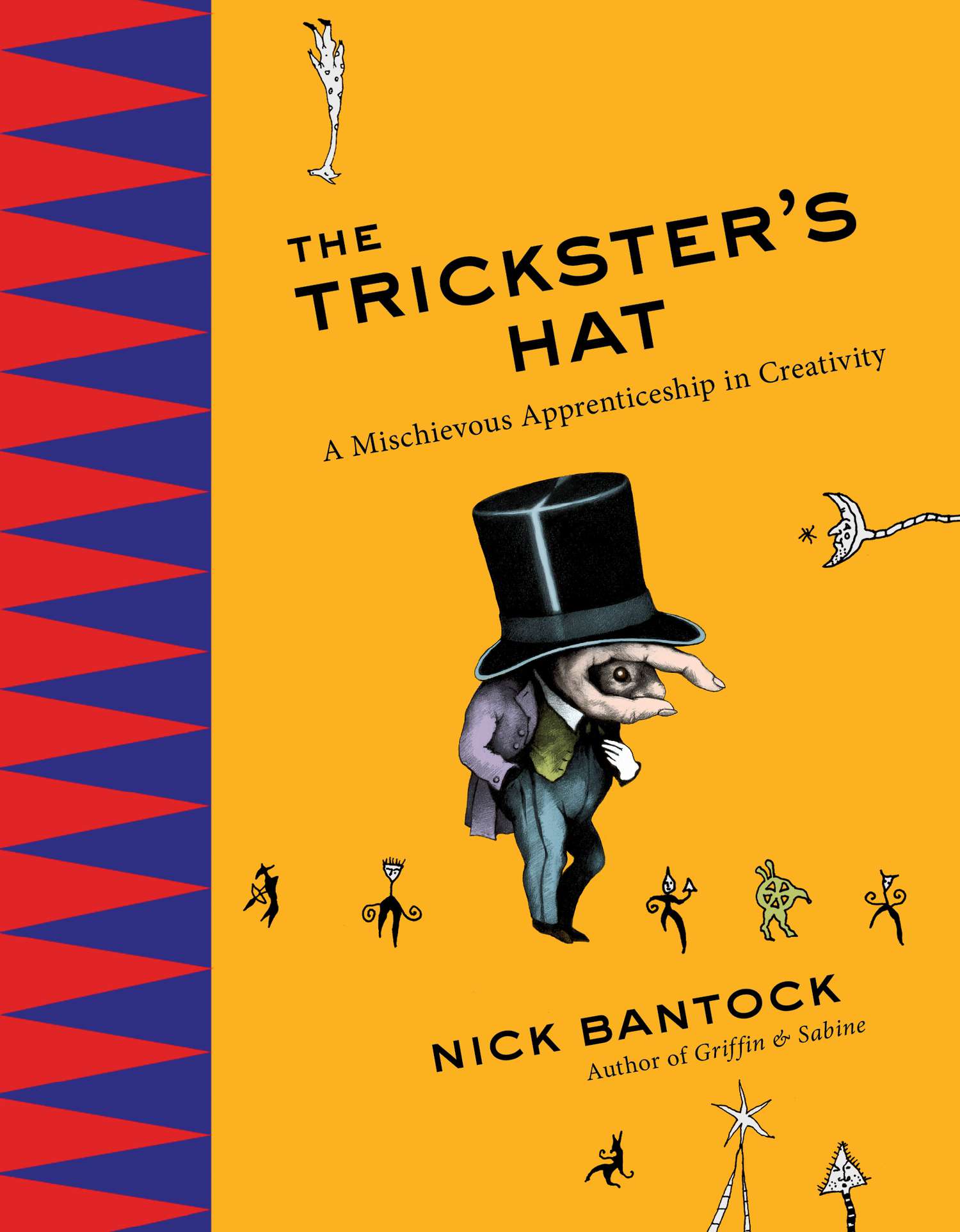
After reading an advanced review of Nick Bantock’s The Trickster’s Hat: A Mischievous Apprenticeship in Creativity, I wondered if a book could kick start my creative drive,  help me immerse myself in art, and establish the foundations of regular creative work. The book hadn’t actually been published yet, but my local library system bought it for me as soon as it came out.

tricksters-hat-9780399165023b


Alphabet of Desire Part 1

Title for the Alphabet of Desire. The lettering is based on Gothic Versals.

Title for the Alphabet of Desire. The lettering is based on Gothic Versals.

I don’t remember where I first heard the term “Alphabet of Desire,” a magical device invented by artist Austin Osman Spare, but it was something that synchronistically popped up here and there, until it occupied a firm space in my mind. I went so far as to sketch out the ideas I would use in my own Alphabet of Desire, and would find them every couple months or so.

The first initial cap for my acrostic novella. The wood symbolizes the Tarot wands and the concept of generation. A sprouting stick signifies new beginnings and earthly ventures. The snake represents the mystic male generative principle.

The first initial cap for my acrostic novella. The wood symbolizes the Tarot wands and the concept of generation. A sprouting stick signifies new beginnings and earthly ventures. The snake represents the mystic male generative principle.

At the same time, I had also been long kicking around an idea of writing a story whose plot was based on the Tarot’s journey of the Fool (i.e. a work of twenty-two segments, each based on a Major Arcana).

For every chapter of the Alphabet of Desire, I also do a page of hand drawn letters in various fonts, which serves as a centering exercise.

For every chapter of the Alphabet of Desire, I also do a page of hand drawn letters in various fonts, which serves as a centering exercise.