Monthly Archives: July 2014

Getting Centered

img096

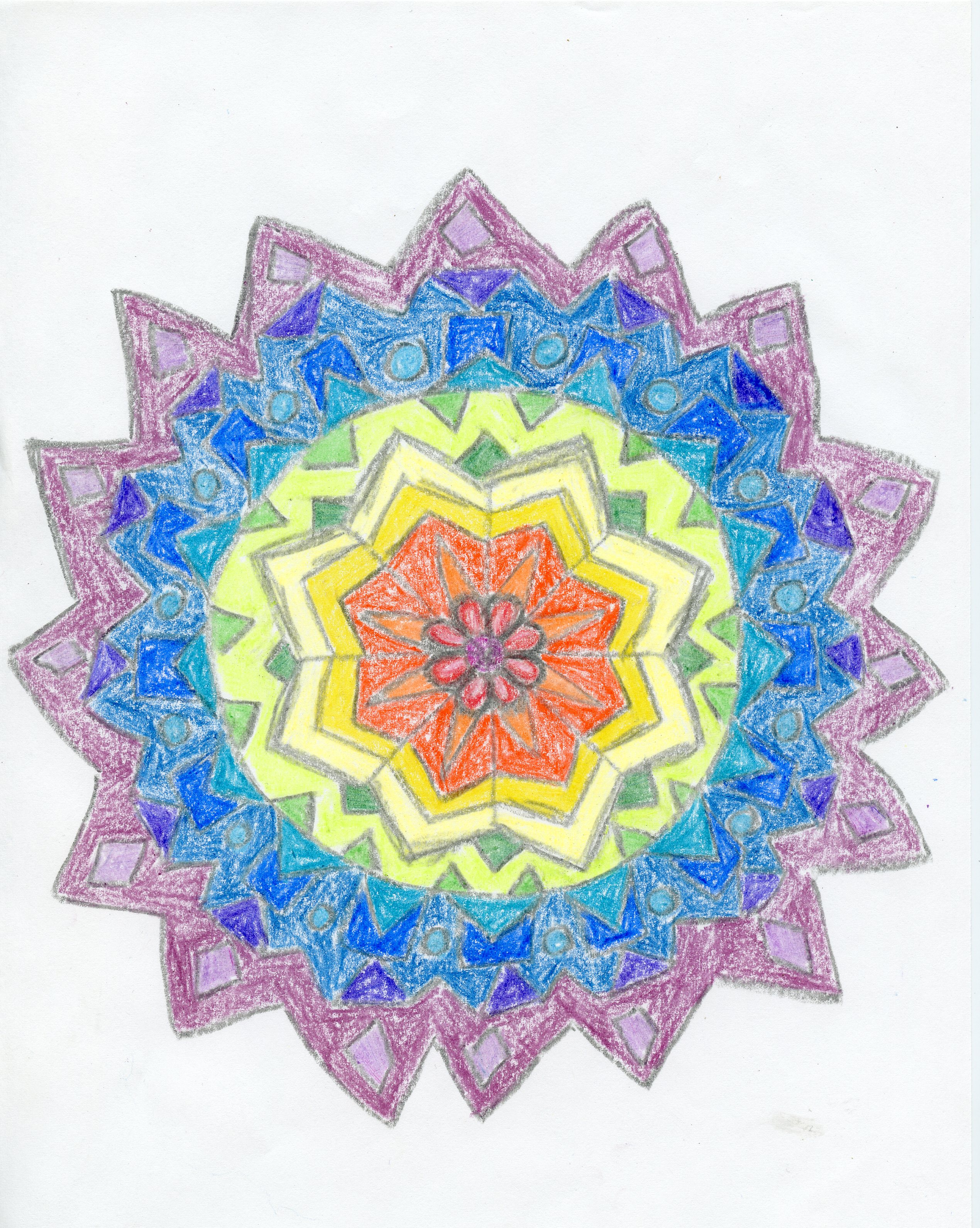
This is a case where drawing a mandala really did serve primarily as a centering exercise.

It’s not easy to get me angry, but when there’s something to get really angry about, my brain gets obsessive. My husband and I received some upsetting news the day before we were scheduled to go down to Florida to visit my grandparents, and we agreed that we wouldn’t talk about it until we got back. Of course, we were both thinking about it the entire time. When we returned, we both had to deal with the situation, which I did by writing a 2000 word email. It took about 2 hours. The words had been brewing and stewing in my brain all week, and by the time I finished, I was in a massive state of agitation. Drawing this mandala helped me regain my composure. I deliberately used rainbow colors to lift my mood, although the skewing of the pattern shows to me how off-kilter I was at the time.

Big Eyes

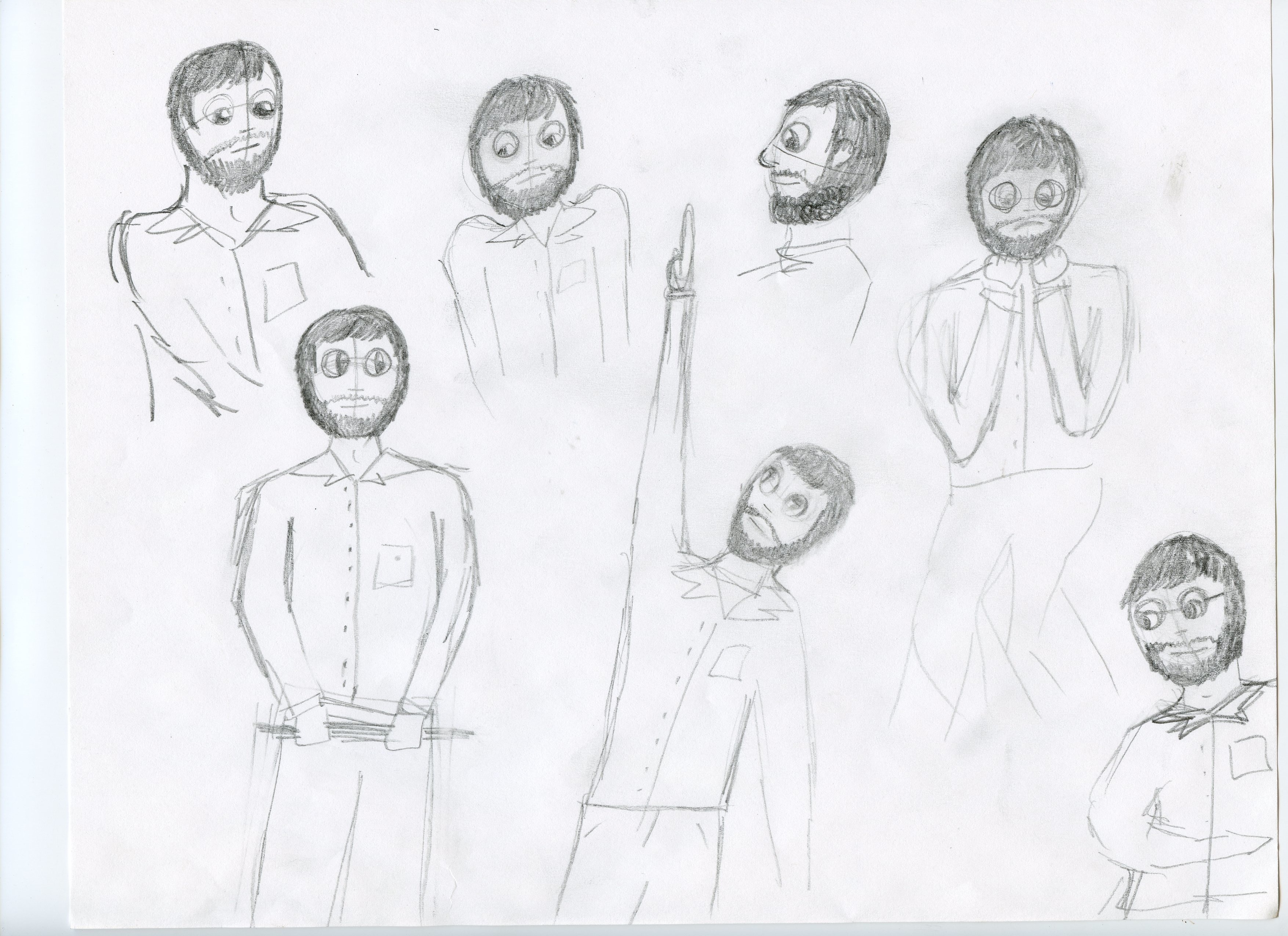
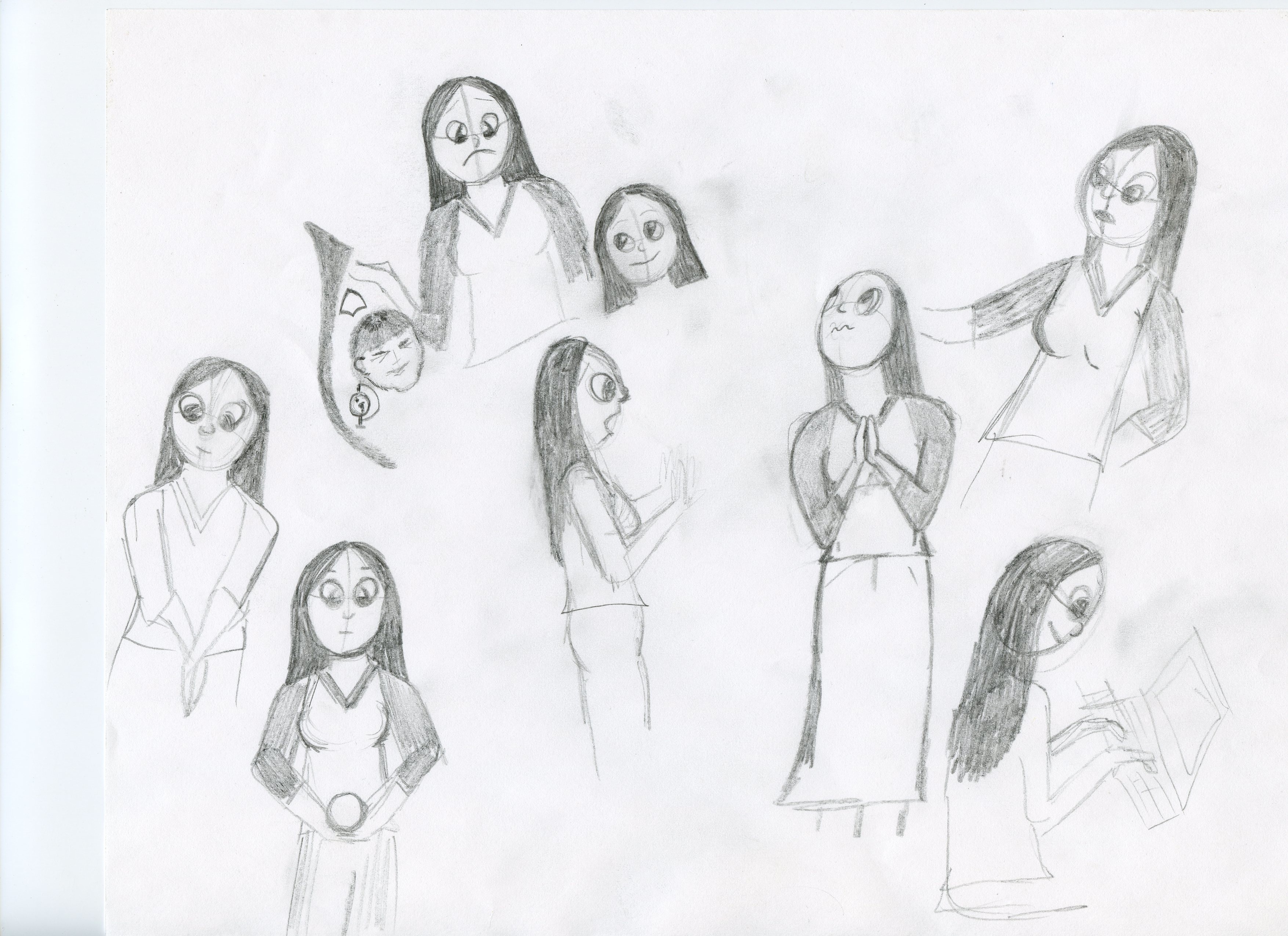
In my quest to develop a style that would allow me to draw a daily webcomic, I experimented with a more anime-inspired face. A lot of cartoonists create these kind of guidelines, so they can see how the characters typically looks in various positions, with various emotions on their faces.

This would be me as an anime girl, I guess

This would be me as an anime girl, I guess.

My problem, as it’s always seemed to me, is that it doesn’t feel as if it’s possible to draw the same character over and over. Does she even look like the same girl? Her face is shaped differently in different pictures. Some cartoonists deal with this issue by drawing every character sort of the same, and just differentiating them through clothing and hairstyles.

Darling Husband, in the same style. But what if I want another character with a full beard in a button-down shirt?

Darling Husband, in the same style. But what if I want another character with a full beard in a button-down shirt?

Ultimately, when I start the graphic novel, the kids will probably have to stand in as models. A certain degree of cartoonishness is acceptable to me, but only up to a point. The proportions of the bodies and the faces needs to be somewhat realistic.

Thinking about Seahorses

Seahorses have been on my mind for a while. Who doesn’t love seahorses?

Seahorses at the Arizona-Sonora Desert Museum

Seahorses at the Arizona-Sonora Desert Museum, taken June of last month.

They’re adorable, they’re soothing to watch, and they have the interesting characteristic of gender-swapping gestational duties.

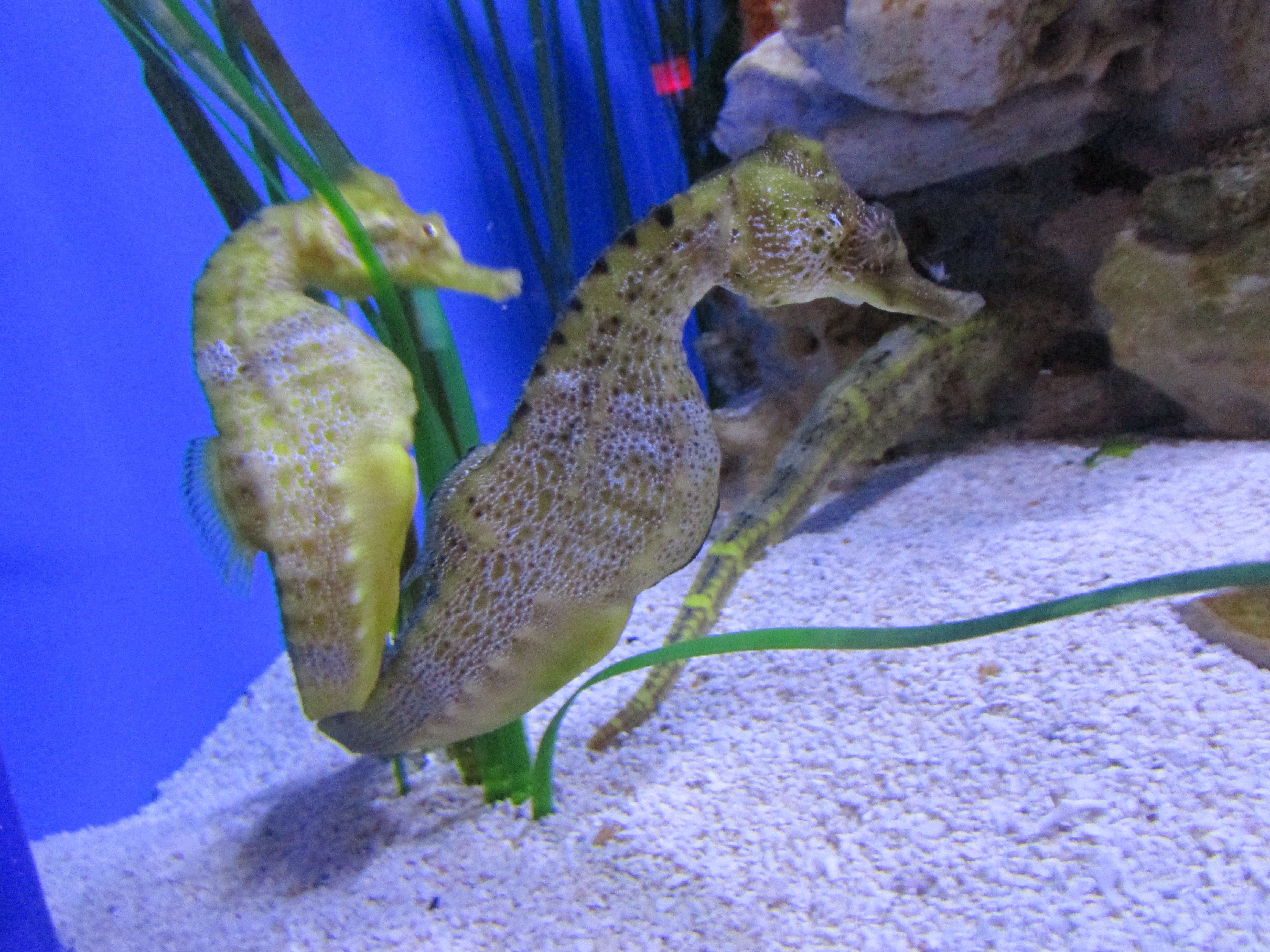
Seahorse at Gumbo Limbo, a sea turtle rescue I visited last week in southern Florida.

Seahorse at Gumbo Limbo, a sea turtle rescue I visited last week in southern Florida.

The drawings I summon, whole cloth, from my head, don’t always come out the way I envision them. Sometimes I feel the muse is guiding me (as I did with Athena), but usually I end up with a cartoonish representation of a thing that I can describe better in words than in pictures.

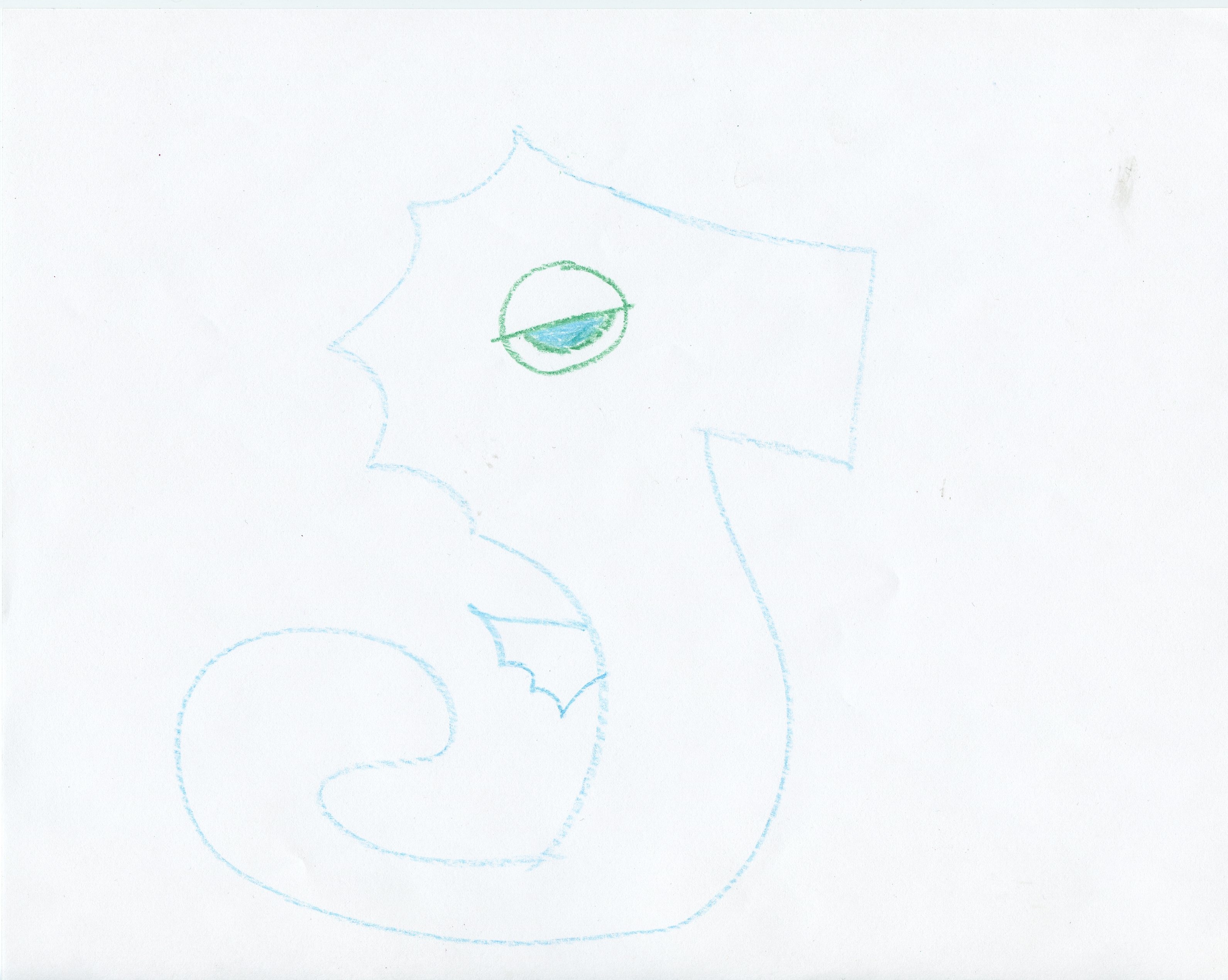
This is what it looks like when I try to draw a seahorse from my own imagination with no referential images.

This is what it looks like when I try to draw a seahorse from my own imagination with no referential images.

A few weeks ago, I had a brilliant idea for a T-shirt, which I ran past my stepkids. They seemed to think it was a pretty amusing idea, and I’m very happy with the sketch I drew a few days ago. For this image, I looked at a bunch of photos of seahorses, but I also looked at the design of a popular cartoon I wanted to parody.

Can anyone guess the name of this noble lady?

Can anyone guess the name of this noble lady?

I’ll be working on the digital version of this image today, and hope to have a good design within the week (if you know what fandom I’m spoofing, you probably realize that her mane is flowing in the wrong direction, and besides which, I didn’t make her head big enough for her eyelashes), but first, I’ll be blogging a bit more. Now that I’m started to get page views and followers, I’m going to attempt to update 5 days a week!

Mapping Stories

Jacks, my little hero

Jacks, my little hero. From the unpublished novel The Girl Who Followed Her Own Counsel. Drawn sometime in the late 90s. 

It took me 17 years to write the first draft of my first novel, and while the storytelling came hard, the characterization and world-building came easy. I lived in that world for years, and it’s an easy one to go back to. I believe I did sketch out at the major city at least once, but it was a picture drawn from memory; I didn’t need or use it as a reference, because I knew exactly where everything was. I knew it so well that when I wrote the sequel, I still didn’t need the map, even though the characters spent time the other side of town, where Jacks rarely ventured in the first book. I wish I still had that map, but I have a feeling it’s long-gone; I haven’t seen it in years. Possibly, it was done in a notebook, in which case it might turn up.

Mallory's mansion, from my 9th unpublished novel, The Hermit, sketched on the back of a library receipt.

Mallory’s mansion, from my 9th unpublished novel, The Hermit, sketched on the back of a library receipt.

Mallory’s mansion was the first time I needed to sketch out a scene I couldn’t hold in my head. It’s a sprawling, one-story adobe, built around a series of inner courtyard gardens, and this drawing helped me keep the protagonists’ progress through the building straight in my mind. Kaija, the eponymous hermit of the novel, knows the building well, but she hasn’t been there in years. Mallory has passed away, and Kaija and her friend, Little Brother, are systematically searching the rooms for a message they believe Mallory may have left.
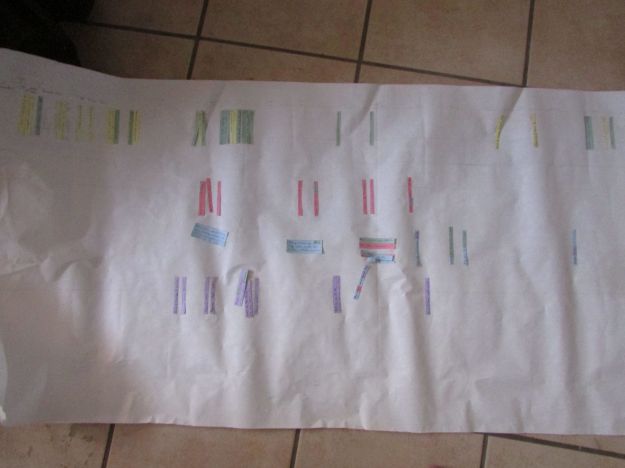
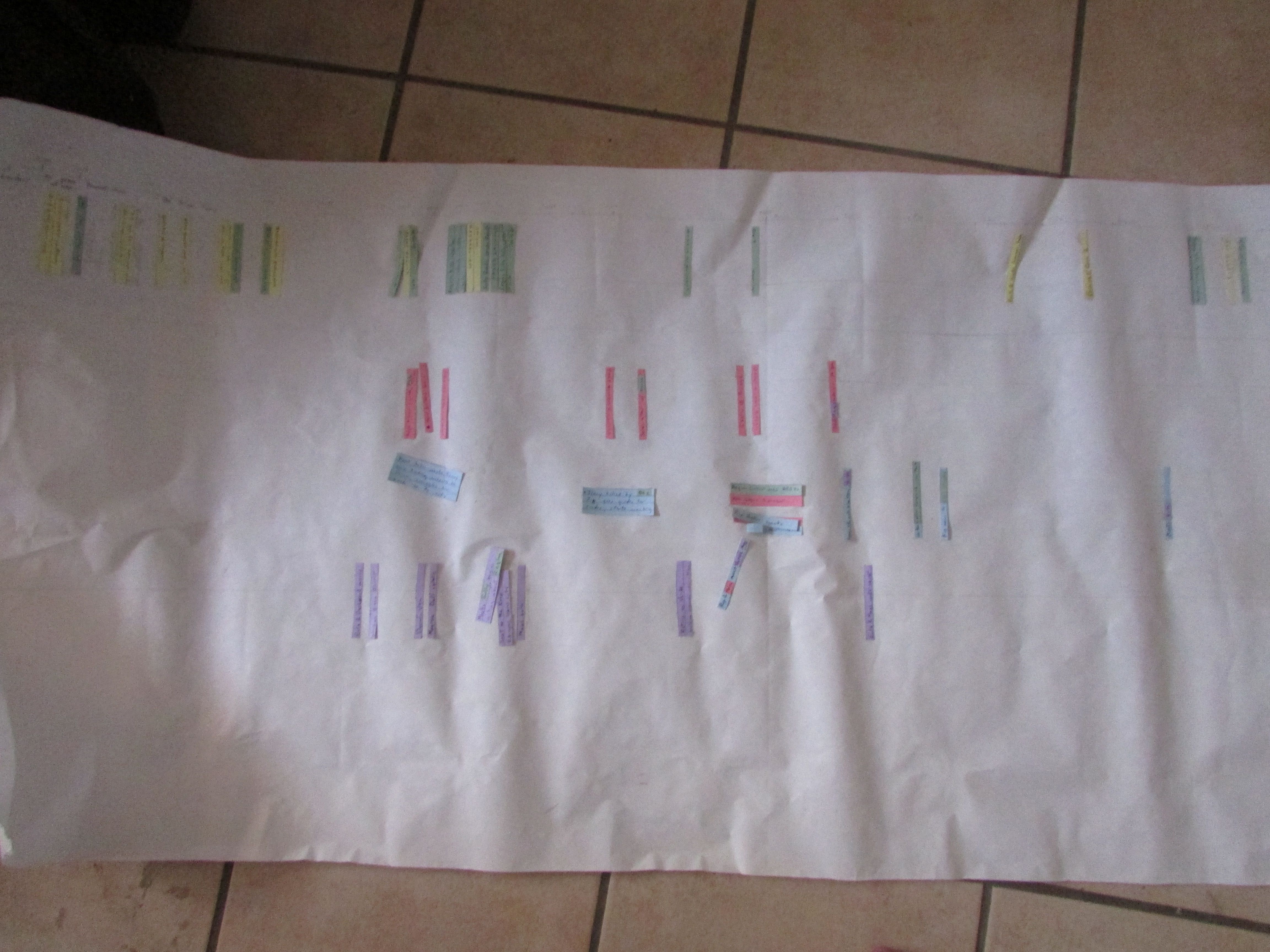
New Pueblo timeline, showing the history of the city and the history of several families, along with the protagonist's progress.

New Pueblo timeline, showing the history of the city and the history of several families, along with the protagonist’s progress, from my 10th unpublished novel, Greenpunk

When I started Greenpunk, I knew it would be at least as complicated as The Girl Who Followed Her Own Counsel, and also that it wouldn’t be a world I could live in. First of all, it’s a dystopian novel and not as pretty as Jacks’s world, and second, my aging brain can’t handle spending 17 years on a first draft. The 2 years it actually took really wore me out; I still haven’t started revising, because it was so cumbersome to gestate (800 pages!). To keep the details straight, I used 2 visual mnemonic devices: a timeline, and a family tree. The timeline actually starts a hundred years before the novel; it’s a murder mystery, so the backstory needed to be firmly in place before the writing began. I started the timeline before I started the novel, added to it as I became more familiar with the world, and then set it aside about 2/5 of the way through the story, once all the characters had met. At that point, I mostly only consulted it to remember the ancient history, the things that happened before the main characters were born.

The Collier family tree. On the off chance that I ever finish revising and sell this novel, I’ve blotted out the details that are mysteries in the book so as not to accidentally ruin the surprise. If it ever comes to that. I don’t think it’s possible to actually read the timeline above, so I didn’t bother editing that, although it’s full of spoilers.

The Collier family tree was a document I consulted frequently as I wrote. Not only did it help to keep the history of the city’s most illustrious family straight as Rip, my protagonist, began to sort it out himself, it also gave me easy access when I needed to bring in new characters. Looking at this chart, which I drew before I started writing, allowed me to answer questions such as, “Who are so-and-so’s confidantes?” and “Which characters are most likely to rebel against the patriarch?” and “Who dislikes whom?”

Darkest Agola, a child's fantasy world, set on top of his physical world

Darkest Agola, a child’s fantasy world, set on top of his physical world

I’m excited, because the night before last I drew the above map. The first week of August, I’ll be taking a writing retreat to Flagstaff with another writer, where I hope to draft the entire script for the graphic novel I want to start drawing in the fall. This map helps me envision a lot of the story. My protagonist, Prince, is 10 years old on page 1. He lives on his family’s farm, but he envisions it as a magical world where he can set the rules. The upper right hand corner represents the part of the farm his grandmother sold off before he was born, which is now a suburban cul-de-sac. Obviously, a lot of the story’s conflict takes place at the border between these 2 worlds.

A lot of the writing is done in my head, often long before words get committed to paper. Maps, timelines, and family trees help cement the details so they’re firmly drafted before the actual draft.
 

Soft Craft

The only thing I can really competently sew is a curtain. I’m envious of those people who whip out renaissance dresses and elf coats and doll clothes and leather bags. It seems impossible to me. When I try to make a quilt, I start out with the best intentions and perfect squares but soon enough my lines are diagonal and nothing lies flat.

The Monica Doll, slightly worse for the wear

The Monica Doll, slightly worse for the wear. I still have the human-sized overalls my mother made for me from that purple denim.

This is a ragdoll I made for a guy I dated in college, so he could take me with him on a semester abroad in Japan. He gave me a hand made bracelet of copper mail. Both the doll and the bracelet were imperfect creations and kept breaking (links falling off the jewelry, seams bursting on the doll), and we had to keep asking each other to fix them. When we broke up, almost 20 years ago, he kept the doll and I kept the bracelet. They were both broken, like our relationship, and neither one of us wanted to invest the energy to fix the tokens when there was nothing left to fix them for.

About a year ago the guy contacted me on Facebook and asked if I wanted the doll back. I was frankly amazed that he’d had it all this time. I had assumed he’d set it on fire, like he probably did with all the photo negatives I tried to get back from him, or, at the very least, voodooed me up. But the doll was in about the same condition. Rather then fixing the seams, which would just burst again, I lay in some good patches on her so she’s a bit sturdier than she was before, if not somewhat worse for wear, just like me.

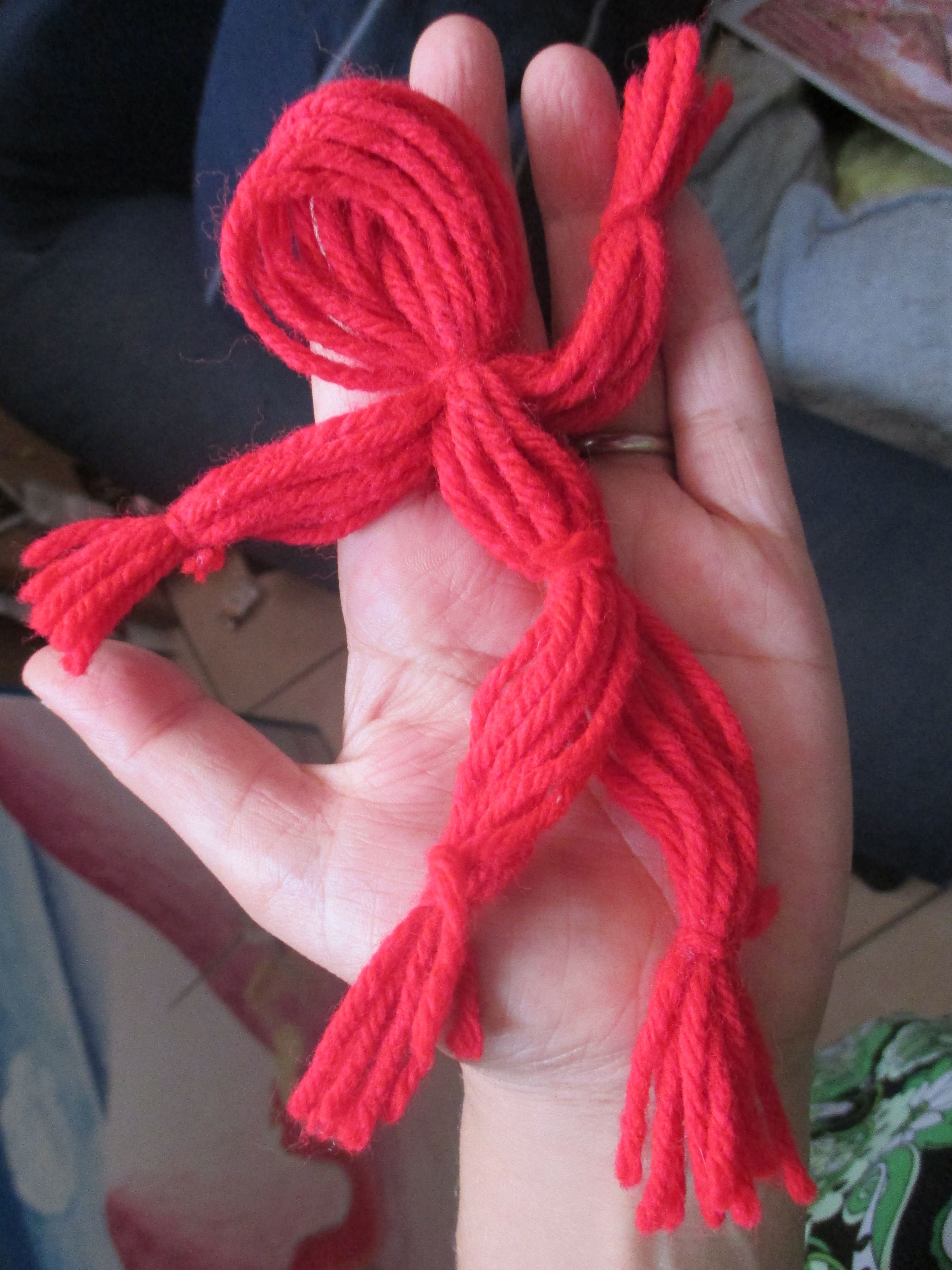
A yarn dolly

A yarn dolly

This is a simple project I did with my stepdaughter, who insists she’s really good at sewing, but really isn’t. You just wrap some yarn around your hand or a card so you have some big loops. Using a small piece of yarn, tie off the head. Then cut and tie off the arms. Tie off the waist. Separate, cut, and tie off the legs. You can dress your dolly or give her hair, but I couldn’t find anything that looked better than naked for her.

There’s Always Room for Dragons

A wyrm type dragon, very chthonic.

A wyrm type dragon, very chthonic.

These are the other 2 dragons from the set of 4 mentioned in the previous dragon post. While I did enjoy playing with light on the mountains, water, and clouds in the red wyrm image, not to mention the sweet reflections on the knight’s shield, I never liked this image very much. Possibly, I was just unhappy with my color choices. I felt that they couldn’t all be blue and green (by this point I think I had acquired a full set of high quality colored pencils, and wanted them to wear down more evenly) but red and purple, at the time, were very daring choices for me.

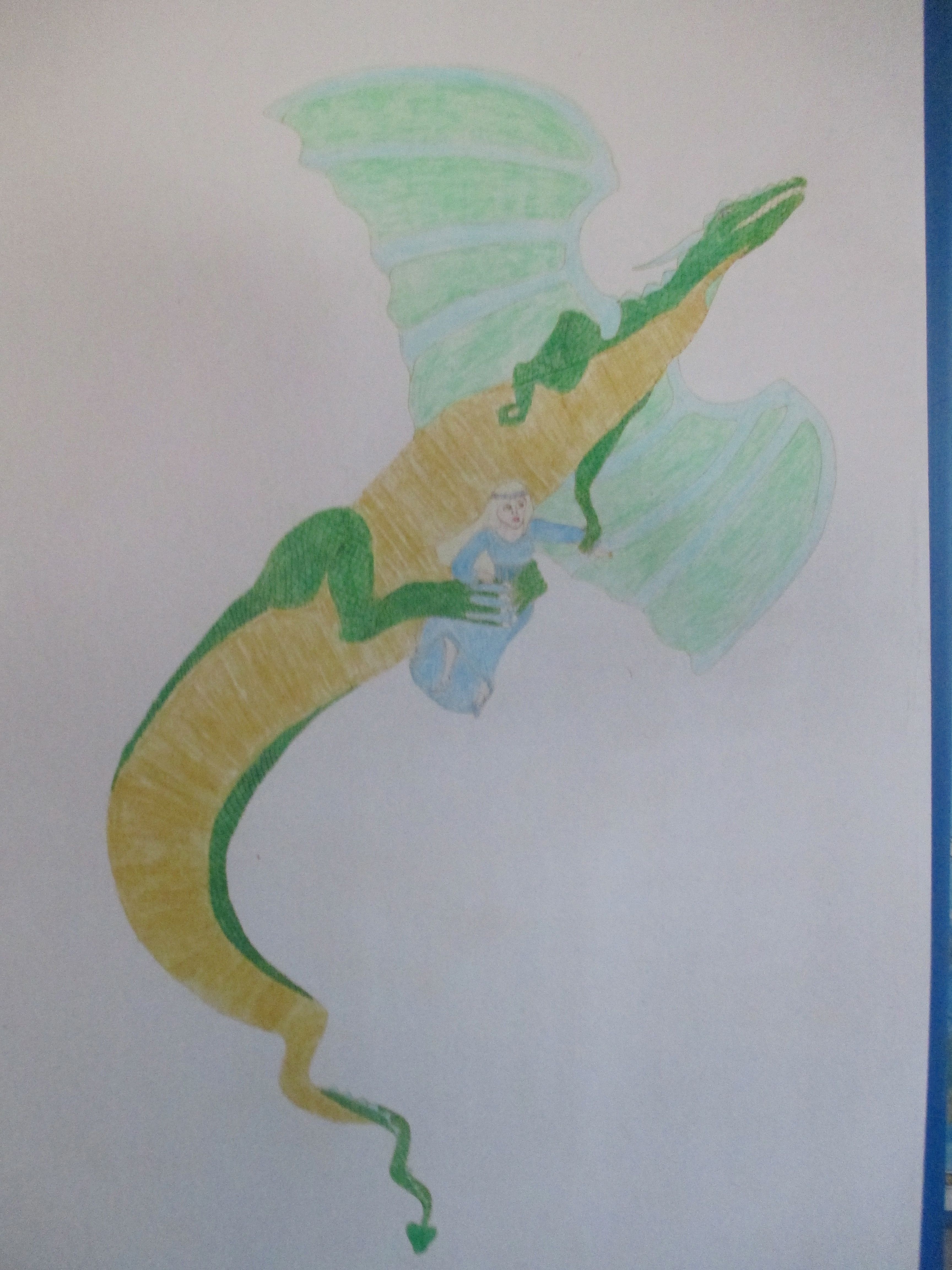
Another western dragon

Another western dragon

Here, the princess never satisfied me. She seem cartoony, and I wanted her to look, at the very least, comic booky. The dragon is pretty solid, though. Love that twist at the bottom of his tail. The colors in these images has faded over the years, revealing some of the textural imperfections.

Ereshkigal, Mesopotamian Goddess of the Underworld

Just finished and uploaded a new design to the shop, and I’m pretty satisfied. Ereshkigal is a section out of the Scroll of Wisdom, the second goddess, after Athena, in the Alphabet of Desire.

Ereshkigal, Mesopotamian Goddess of the Underworld

Ereshkigal, Mesopotamian Goddess of the Underworld

She’s a little bit creepy, but she’s an embodiment of death, so, what’s she supposed to do?

This drawing gave me a lot of trouble, both the original and the digital version. I sort of felt like she was watching me with her hypnotic eyes, as if to say, “Soon enough, you’ll come to me.”

I first met Ereshkigal in Alan Moore’s Promethea, where he retells the story of Ereshkigal having her younger sister, Ishtar/Inanna brought low. The goddess of the heavens is forced to give up all her clothes in order to descend into the land of the dead, in much the same way, I imagine, as a seeker of knowledge must shed certain thoughts and ideas that have adorned her in the past in order to unfold new mysteries.


Comics! Part 4

So, listen. I’m going to draw comics. Somehow. Graphic storytelling is the future. For a long time, I thought I could find artists to illustrate my stories. I’ve long had the entire script for an X-rated speculative fiction BDSM graphic novel in my head. It would be very serious, and very sexy. If you’re into that sort of thing. I don’t know if I’ll ever have the ability to draw what I can see, but I’m going to draw something.

My first web comic

My first web comic

When I got the Wacom Intuos, this is the very first thing I drew, just to assure myself that drawing a comic page was not beyond my ability. And I’ve actually gotten better at digital drawing since then. I think it makes sense to sketch things on paper first, though. It’s easier to see the big picture that way, and, as another artist pointed out (wish I could remember who for the shout out) if you don’t do hard copies, you can’t sell originals.