The Trickster’s Hat Part 6

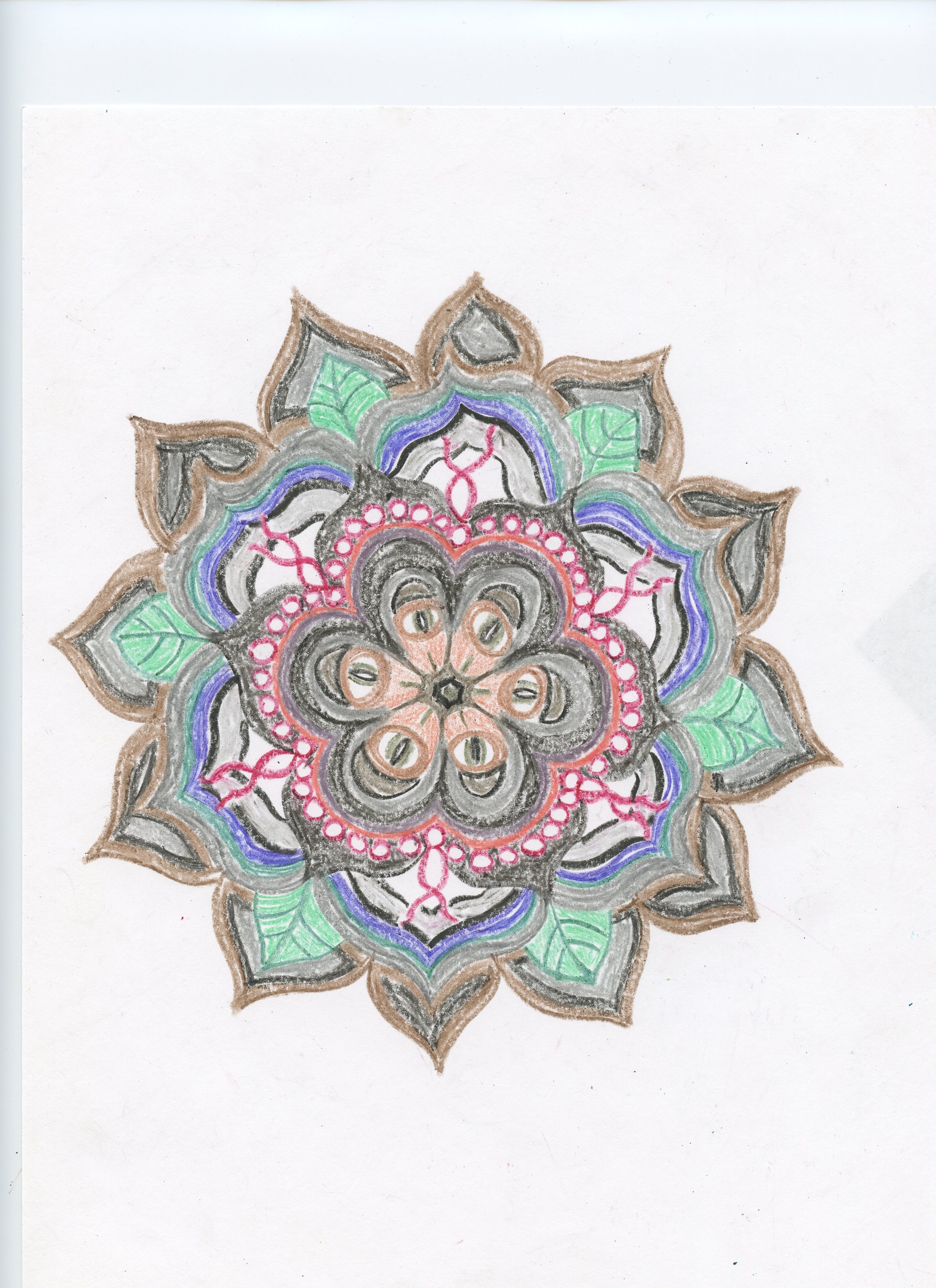
I do hope this image is sufficiently abstract/artistic to avoid suggesting straight up pornography. It's not meant to be erotic; it's meant to describe a dual principle.

I do hope this image is sufficiently abstract/artistic to avoid suggesting straight up pornography. It’s not meant to be erotic; it’s meant to describe a dual principle.

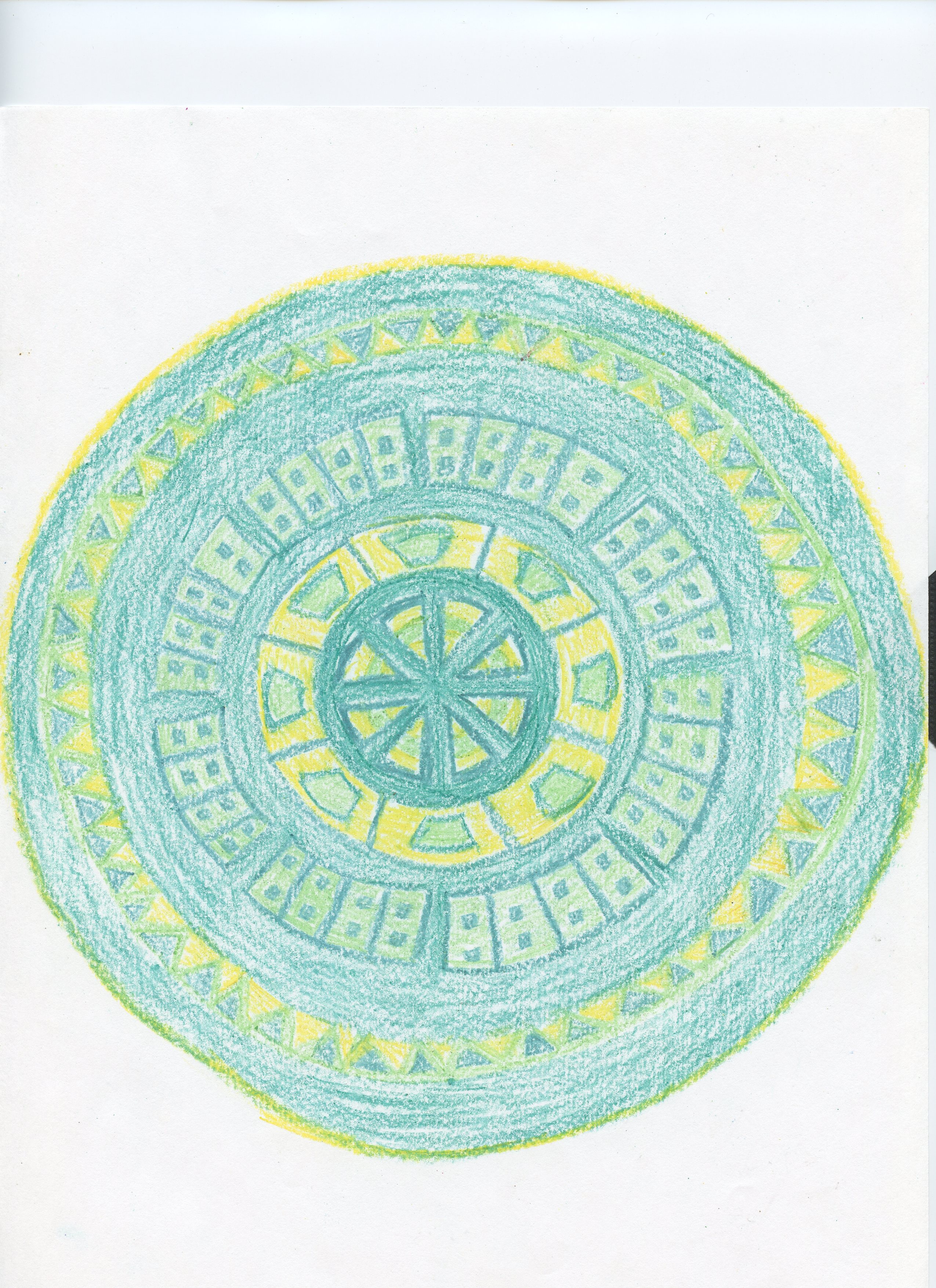
Exercise 20 explored the concept of muse and duende. The term “duende” was new to me; Bantock uses it as a sort of counterpart to the muse. It was supposed to be executed in two pieces, on wood, and I’m kind of sorry I didn’t follow the directions, because I was really pleased with the finished product and the paper was not designed for this kind of paint. It would have looked and held up better on a more suitable canvas.

I followed the spirit of the instructions, if not the letter. I suppose most people would have drawn actual characters, but whichever entity, muse or duende, spoke to me, I was inspired. To highlight the sacred nature of the yoni and the lingam, I adorned the image with stick-on gems.

The Trickster’s Hat Part 5

If you plan to apprentice yourself to Nick Bantock, you’ll need a lot of art supplies. I had most of them already, although I had to go out and purchase different types of paper at various points in the process, along with matte medium. There were a couple exercises that instructed readers to go to thrift stores and buy, essentially, junk, and something in me bristled at this. I was in the process of getting rid of junk and didn’t want to accumulate more.

You're simply much more likely to find unicorns and fairies than dragons and monsters on the knickknack shelf at Goodwill.

You’re simply much more likely to find unicorns and fairies than dragons and monsters on the knickknack shelf at Goodwill.

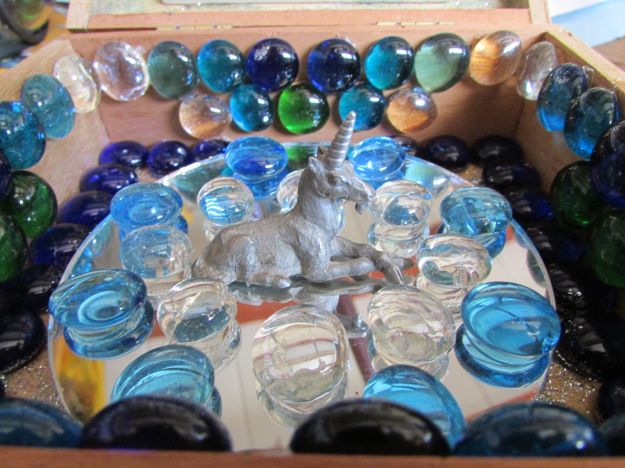
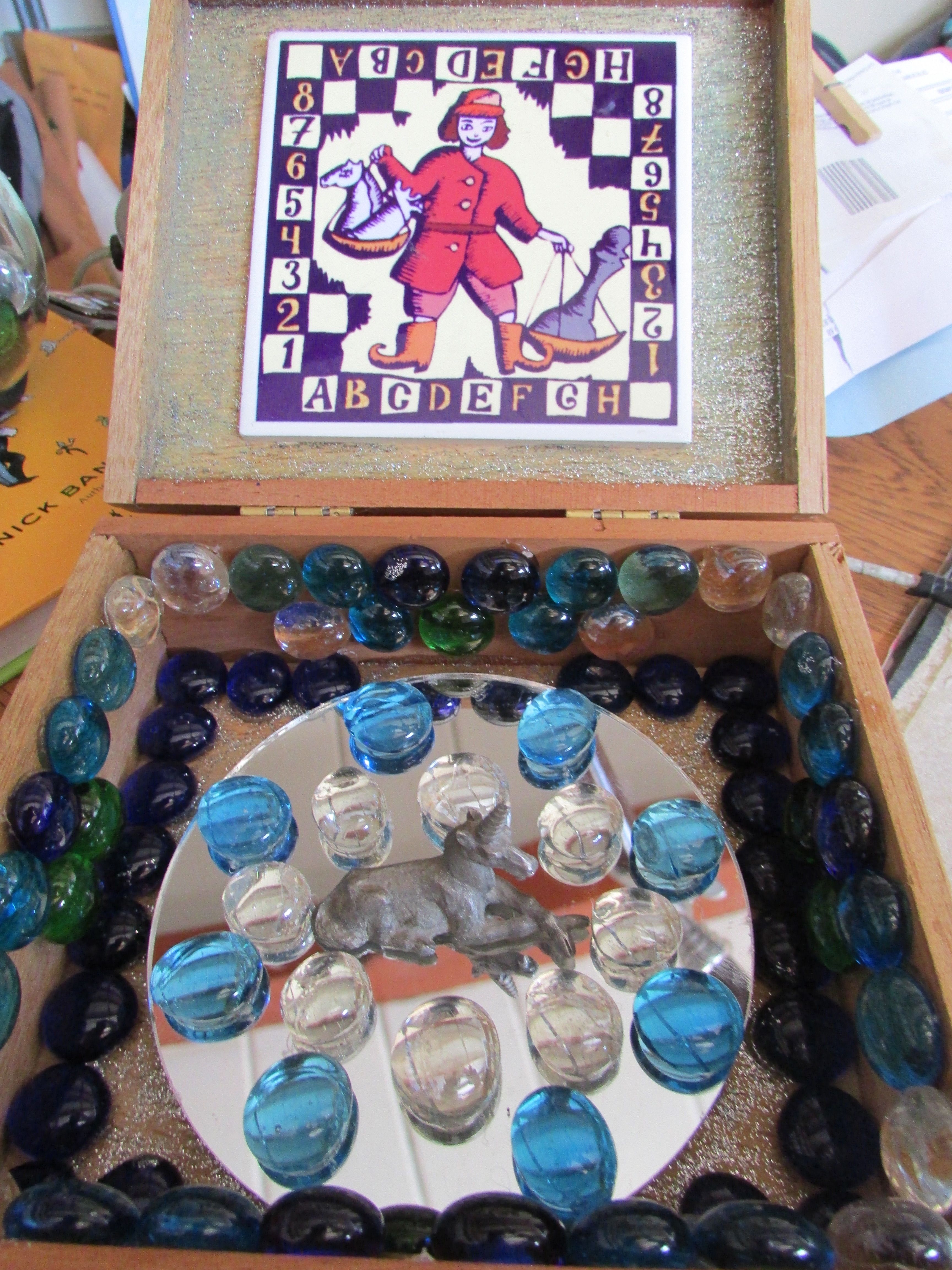
Still, I had intended to do every exercise, so I relented, and I’m pleased and amused with this one. Exercise 10 asked readers to find a cheap item that represented themselves (Bantock’s was a taxidermied skunk that had sat so long in a window it was bleached white) and mount it in a box with other items that seemed to go along. My diorama is conveniently situation within a cigar box, which I acquired, along with all the trimmings, at Goodwill.

box of me 2

For the purposes of this exercise, I am a pewter unicorn, sitting upon a mirror, surrounded by colored glass, mounted inside a wooden cigar box, with a playful tile roof. The unicorn is chill and so am I. 

The Trickster’s Hat Part 4

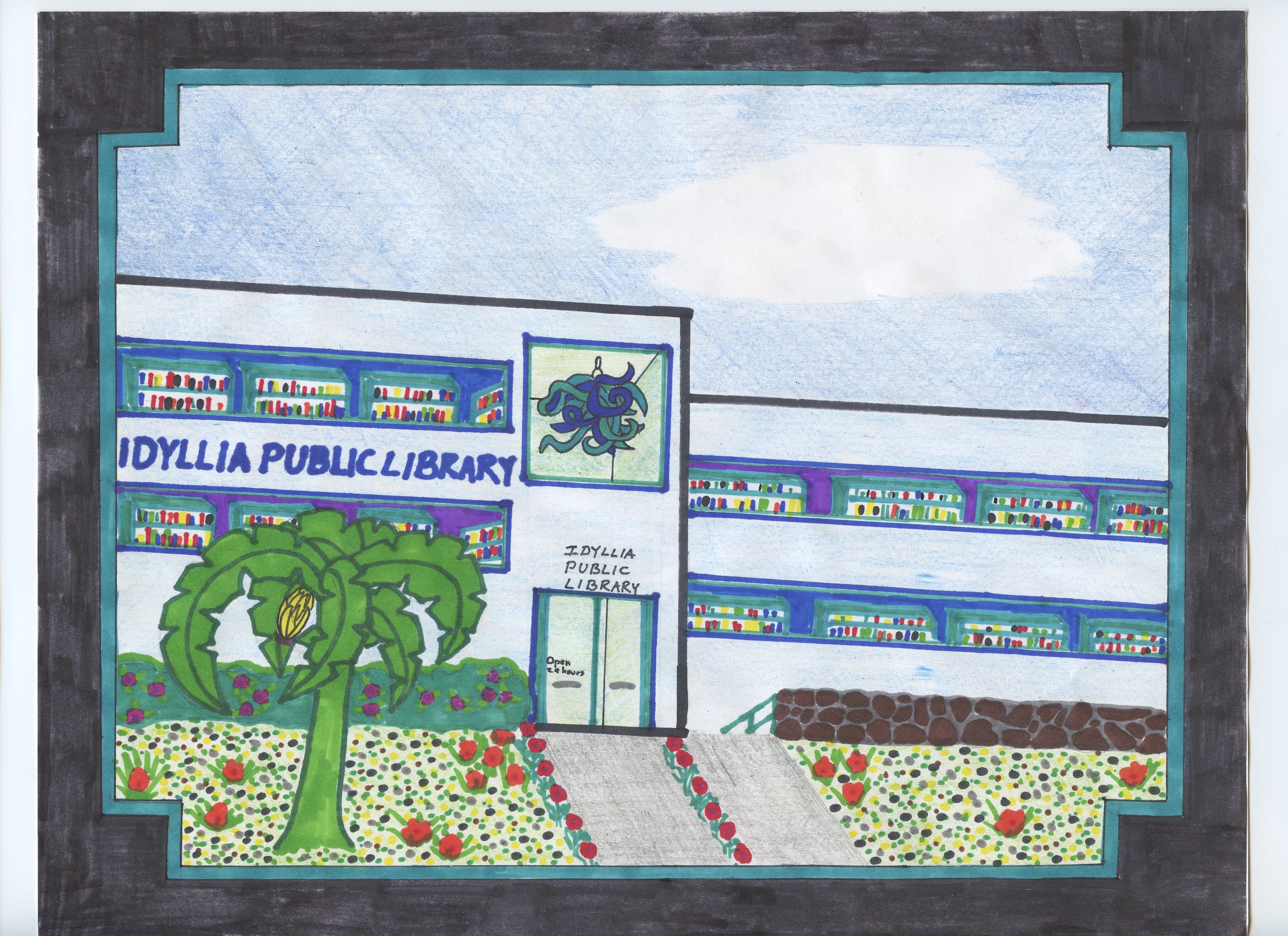
Postcard from the Idyllia Public Library

Postcard from the Idyllia Public Library. Yes, this imaginary library in an imaginary country houses a lovely Chilhuly chandelier. The building itself is based on the architecture of the dorm I live in all four years of college.

Exercise 7, to create a country, was among my favorite prompts in this book. A rather involved set of instruction suggested details to imagine about the place, and, as I have created many, many imaginary countries in my life, it was easy to build something huge and fanciful and fulfilling. It was possible to flex all the creative muscles in a serious fashion but to withhold judgement, giving reign to creativity.

postcard edited

Postcard home: I blanked out my parents’ address, because you know there are some weirdos on the Internet.

The second part of the exercise involved creating a postcard from the imaginary country, writing a message home on the back about a vacation in the imaginary country, and then adding a stamp from the imaginary country. I drew the postcard 8.5 x 11 and made that stamp proportionally larger just because it’s easier to work in that format. I used two kinds of markers: Crayolas and Sharpies. Some of the themes from this exercise echoed in later works.

Especially proud of this stamp. The economy of Idyllia is based on semi-precious stones. It is a island founded by dragons and covered with banana trees. I am the queen.

Especially proud of this stamp. The economy of Idyllia is based on semi-precious stones. It is a island founded by dragons and covered with banana trees. I am the queen.


The Trickster’s Hat Part 3

If you’re familiar with Nick Bantock’s work, you know that collage figures prominently. Collages are fun; throughout my life, I’ve often created them, not with the intention of producing a work of great art. They offer a method of self-expression, but they’ve never seemed to require any great amount of creativity.
Exercise 4, Part 1: early childhood. I was a bit of an alien.

Exercise 4, Part 1: early childhood. I was a bit of an alien.

Exercise 4 began with 3 cardboard squares and asked for an autobiographical triptych, complicated by the restriction that the images must all be black and white. In fact, in the 21st century, black and white printing isn’t terribly common. Color printing is so very cheap, and so much more eye catching. Even newspapers are printed in color, but I didn’t have much in the way of newspaper either, since it’s the 21st century.

Screen Shot 2014-06-09 at 12.07.00 AM

Exercise 4, Part 2: Adolescence. Dark and confusing, morbid and upside down, with moments of hope.

For the most part, the materials I had on hand were old National Geographic and Smithsonian magazines. I found a few usable images in the local free entertainment paper, The Tucson Weekly, and one or two bits in my husband’s trade magazines. Toward the end, as the squares began to fill up, I utterly ran out of useful black and white images and finished with a couple things printed in black on colored paper: the invitation to an annual volunteer breakfast I never attend, the map to the Arizona Renaissance Festival, the thank you notes we had custom printed for the wedding.

Screen Shot 2014-06-09 at 12.07.56 AM

Exercise 4, Part 3: The Present. My life is basically awesome. I am older and wiser, with a supportive life partner and plenty of experience. I know who I am.

I was pleased with the final product. These panels do represent my life, even if I don’t feel that collages require much talent or effort. Talking about these images is complicated, though; they’re very personal and meaningful, even with the limits set on the exercise. But collages are easy. I still wanted to learn to draw better.

The Trickster’s Hat Part 2

As soon as the library sent me the reserve notice for The Trickster’s Hat, I was eager to jump in. Some of the exercises involved writing or other forms of expression, but the majority of them were visual, and I needed no encouragement. It was just what I wanted.

Exercise 1: Draw a box with 4 sides, and, in 5 minutes, fill it with as many animals as possible in the box. Then, draw a box with 3 sides, and in 5 minutes, draw as many animals as possible escaping the box.

Exercise 1: Draw a box with 4 sides, and, in 5 minutes, fill it with as many animals as possible in the box. Then, draw a box with 3 sides, and in 5 minutes, draw as many animals as possible escaping the box.

I didn’t love every exercise. Some of them were boring to me. Some of them seemed pointless. Some of them appeared geared to people with even less self-confidence in their creative ability than I had. But I did love a lot of them. Sometimes the ones I didn’t understand at first, or struggled with, or thought stupid, resulted in finished projects I could display with pride.

Exercise 3: Amass a quantity of postage stamps. Rip them up (no scissors) and create a small landscape without using any of the stamps' design elements as the thing they represent.

Exercise 3: Amass a quantity of postage stamps. Rip them up (no scissors) and create a small landscape without using any of the stamps’ design elements as the thing they represent.

Almost instantly, I was able to focus on creating, setting aside a big block of time every night, looking forward to that time and curious about the next exercise in the book.


The Trickster’s Hat Part 1

The Alphabet of Desire was the hardest project I ever undertook. I’m not a magician, except in the sense of being an artist, and I found that the project asked a lot of me.

Some lettering work done for inspiration in the early days of the Alphabet of Desire. The font is based on Lucinda Black Letter.

Some lettering work done for inspiration in the early days of the Alphabet of Desire. The font is based on Lucinda Black Letter.

I was unable to generate momentum, for instance, until I had organized all my books (over two thousand) into Library of Congress organization. Whenever I gained a little traction, something (for example, my wedding) slowed me down.

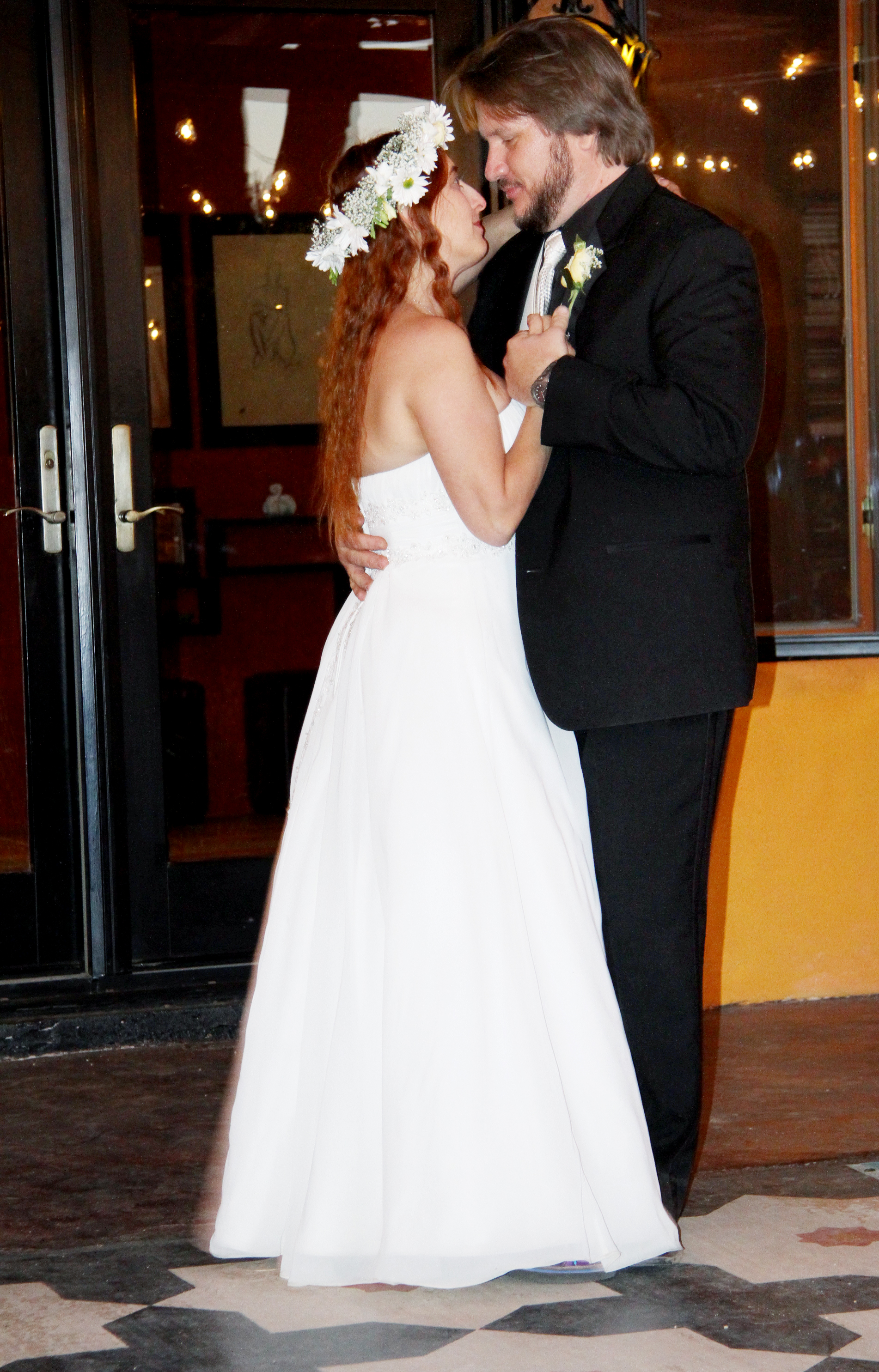
I got married.

I got married.

I simply was not as good an artist as I wished.

After reading an advanced review of Nick Bantock’s The Trickster’s Hat: A Mischievous Apprenticeship in Creativity, I wondered if a book could kick start my creative drive,  help me immerse myself in art, and establish the foundations of regular creative work. The book hadn’t actually been published yet, but my local library system bought it for me as soon as it came out.

tricksters-hat-9780399165023b


Alphabet of Desire Part 2

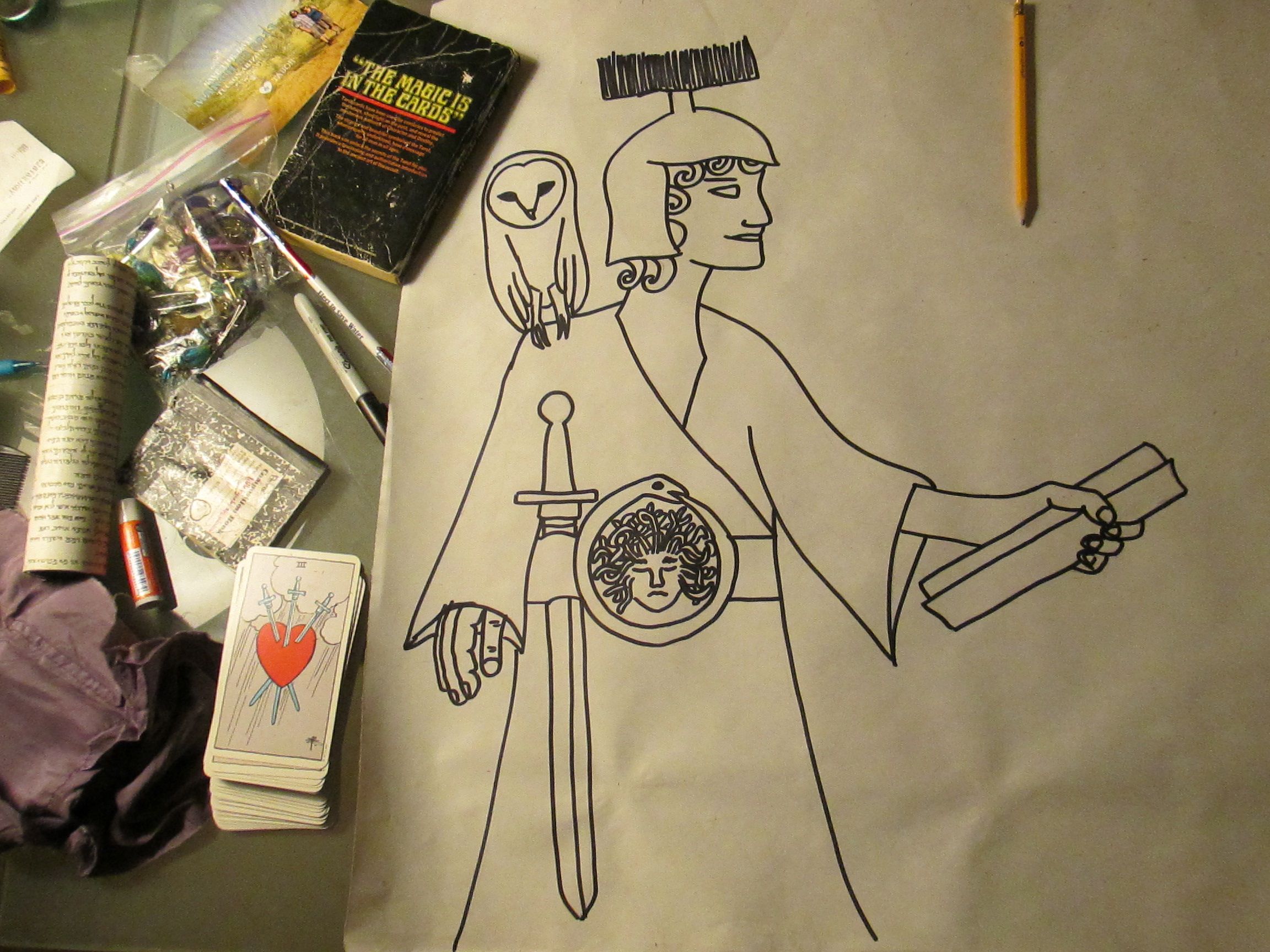
Athena, goddess of wisdom, offers the Scroll of Wisdom. She bears the head of Medusa, encircled by the ouroboros, on her girdle, and carries the sword of the Tarot, which is a symbolic tool for cutting through illusion to reveal truth.

Athena, goddess of wisdom, offers the Scroll of Wisdom. She bears the head of Medusa, encircled by the ouroboros, on her girdle, and carries the sword of the Tarot, which is a symbolic tool for cutting through illusion to reveal truth.

The idea of alphabets in general has always fascinated me, long before I ever even hear the term “font.” I read calligraphy books in grade school and often wrote out fancy alphabets as a centering technique. I liked the idea of decorative caps, and wanted to write an acrostic story with twenty-six chapters, which I would illuminate with twenty-six initial letters.

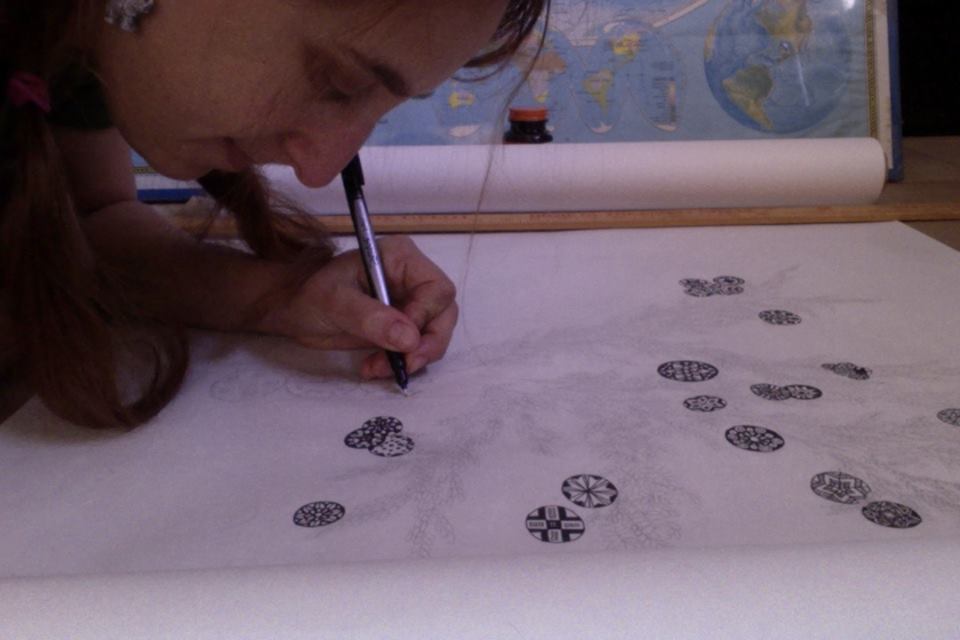
Inking the illustration for chapter C: the magical rowan tree. Mandalas feature prominently in the scroll.

Inking the illustration for chapter C: the magical rowan tree. Mandalas feature prominently in the scroll.

Illustrating the Scroll of Wisdom was a new challenge for me. Graphic storytelling had become fascinating to me in recent years, but my ability to draw in a regimented way, maintaining a consistent style and moving a character through a magical landscape, seemed overwhelming. However, the mission seemed clear. After spontaneously drawing Pallas Athene on a sheet of butcher paper, I realized that, rather then cutting her free from the roll, I should utilize this old method creating a text and simply let one drawing follow the next on a continuous sheet of paper.

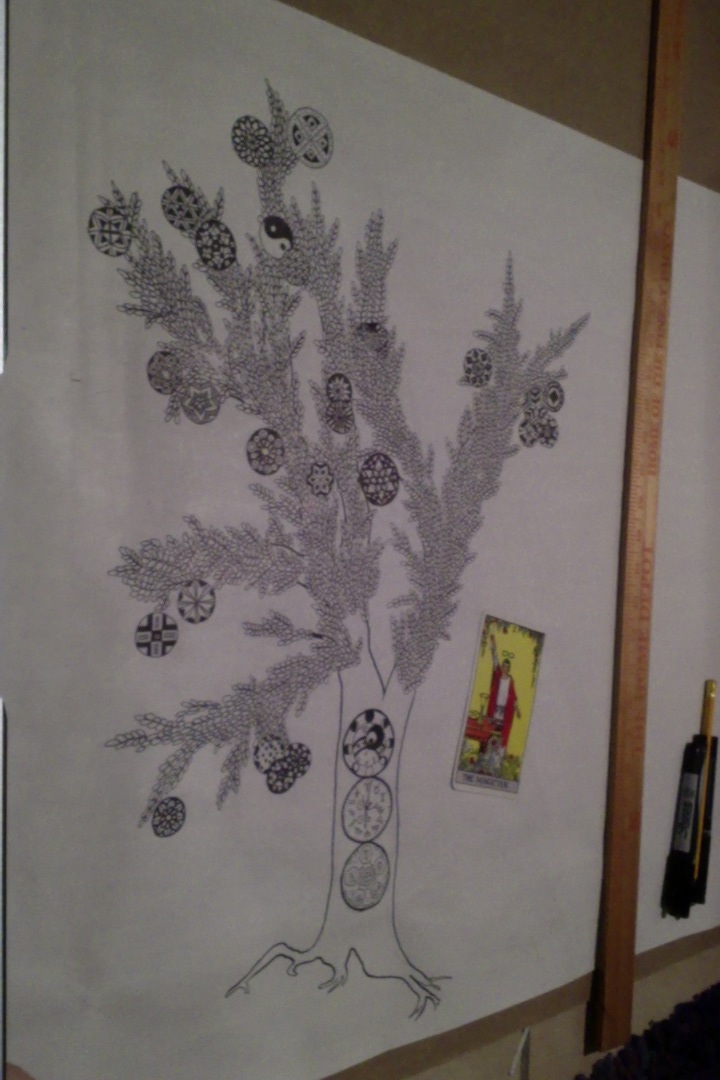
rowan tree

The completed tree

The story gradually revealed itself: a journey from initiation to mastery. The magician’s journey. The journey of the will. We’ll get back to this in a little while….

Alphabet of Desire Part 1

Title for the Alphabet of Desire. The lettering is based on Gothic Versals.

Title for the Alphabet of Desire. The lettering is based on Gothic Versals.

I don’t remember where I first heard the term “Alphabet of Desire,” a magical device invented by artist Austin Osman Spare, but it was something that synchronistically popped up here and there, until it occupied a firm space in my mind. I went so far as to sketch out the ideas I would use in my own Alphabet of Desire, and would find them every couple months or so.

The first initial cap for my acrostic novella. The wood symbolizes the Tarot wands and the concept of generation. A sprouting stick signifies new beginnings and earthly ventures. The snake represents the mystic male generative principle.

The first initial cap for my acrostic novella. The wood symbolizes the Tarot wands and the concept of generation. A sprouting stick signifies new beginnings and earthly ventures. The snake represents the mystic male generative principle.

At the same time, I had also been long kicking around an idea of writing a story whose plot was based on the Tarot’s journey of the Fool (i.e. a work of twenty-two segments, each based on a Major Arcana).

For every chapter of the Alphabet of Desire, I also do a page of hand drawn letters in various fonts, which serves as a centering exercise.

For every chapter of the Alphabet of Desire, I also do a page of hand drawn letters in various fonts, which serves as a centering exercise.

Mandalas Are Magic Part 3

This whimsical punk mandala was inspired by a visit to the Hot Topic store at the mall

This whimsical punk mandala was inspired by a visit to the Hot Topic store at the mall

One thing I don’t worry about when I draw mandalas is perfection. Another think I don’t worry too much about is symmetry. My soul is clearly not perfect. And it is clearly not symmetrical, so why would my mandalas conform to that pattern?

A mandala inspired by satellites

A mandala inspired by satellites

Most of the mandalas in the collection are abstract, but some of my favorite ones are representative. Often, the silly and imperfect ones are the most-eye catching.

Inspired by a burlesque show

Inspired by a burlesque show

I can be serious too. One of the more complicated mandalas represents the emotions I experienced while editing the doctoral thesis of a former friend who refused to talk to me but still seemed to think I was the best copyeditor she knew. She paid me a good rate to work on her long and involved dissertation, but refused to renew our friendship. Another mandala was drawn as my mother-in-law began treatment for breast cancer.

Sometimes, it’s good to be playful about serious things, too.

Most women can probably figure out what serious monthly life event I have amusingly commemorated here.

Most women can probably figure out what serious monthly life event I have amusingly commemorated here.


Mandalas are Magic Part 2

A flower-based mandala

A flower-based mandala

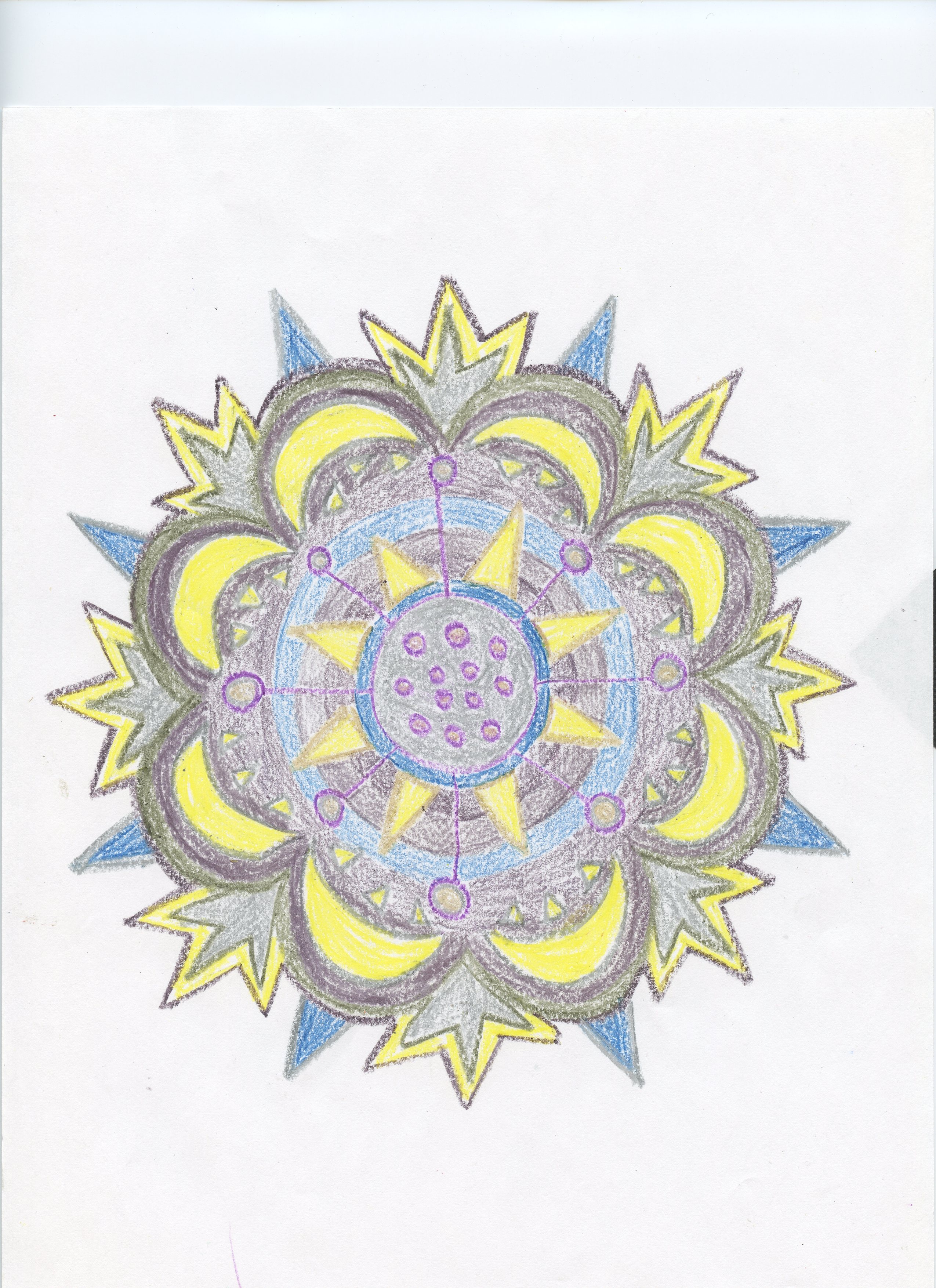
I set out to draw one hundred mandalas to help me find my way as an artist. It took about six months. Part of me thought, “why not one thousand,” but I only got to about one twenty five before other things became more interesting to me. I still draw mandalas sometimes, but it used to be a couple a week.

A mandala inspired by Aztec design

A mandala inspired by Aztec design

Patterns started to appear in the mandalas. Although each was different, there were many based on flowers or other plants, many based on crystals. There were mandalas inspired by holidays and mandalas inspired by tragedies. Comedic ones made my smile, perfectly symmetrical ones made my work a little harder.

Too obvious?

Too obvious?